
The Science Behind Bands, Speed & Power Training, and Building More Resilient Humans
At Black Flag Strength & Conditioning, we are constantly evaluating and evolving our programming to provide the highest quality training experience possible for our members.
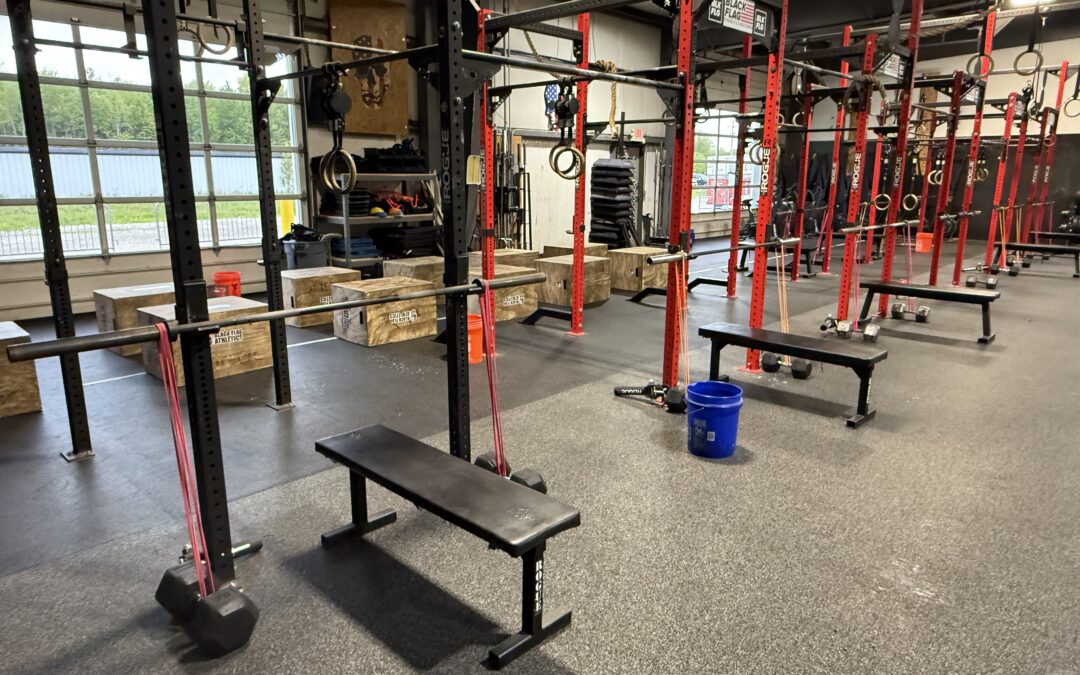
Over the coming weeks, you will notice a greater emphasis on the use of accommodating resistance — specifically bands — during our Speed & Power training days.
For some, bands may simply look like another piece of gym equipment attached to a barbell. But in reality, they represent a training method deeply rooted in biomechanics, sports science, and decades of research surrounding force production, explosiveness, and human movement efficiency.
More importantly, this style of training is not reserved for elite athletes.
While accommodating resistance has long been utilized in high-level athletic development settings, its value extends far beyond sport performance. The ability to rapidly produce force, stabilize dynamically, and absorb high rates of force safely are qualities that impact everyone — from competitive athletes to busy parents, working professionals, and adults simply looking to improve their fitness, health, and longevity.
At Black Flag, our goal is not just to help people exercise harder.
Our goal is to help people move better, become more resilient, and develop real-world physical capacity that enhances their quality of life both inside and outside the gym.
Why Traditional Strength Training Has Limitations
Traditional barbell training remains one of the most effective ways to build strength and muscle.
However, human biomechanics create a unique challenge during many lifts.
In movements like squats, deadlifts, and presses, we are mechanically weaker at some positions and stronger at others. As leverage improves throughout the movement, the body naturally begins to decelerate the load near lockout because less force is required to complete the lift.
This means that although the weight remains constant, force production and velocity often decrease during portions of the movement.
Bands fundamentally change this dynamic.
As the athlete or member moves through the lift, band tension progressively increases. The stronger the leverage position becomes, the greater the resistance becomes as well.
This forces the body to:
- Continue accelerating
- Maintain force production
- Sustain intent throughout the movement
rather than coasting through the top portion of the lift.
The result is a unique training stimulus that improves explosive capability, coordination, and neuromuscular efficiency.
Understanding Force-Velocity Relationships and Power Development
The relationship between force and velocity remains foundational to modern strength and conditioning theory.
Power = Force x Velocity
High-force movements generally occur at lower velocities, while high-velocity movements occur under lower loading conditions. Optimal athletic and human performance requires the capacity to express force effectively across multiple positions on the force-velocity spectrum.
Zatsiorsky emphasized the importance of rapid force expression, stating:
“The athlete should not only be strong, but able to display strength quickly.”
This principle extends beyond athletic contexts into general human movement and wellness. Everyday activities frequently require rapid stabilization, reactive force production, and efficient neuromuscular coordination under time constraints.
Consequently, training interventions aimed at improving RFD and power characteristics may possess value not only for athletes, but for broader populations seeking enhanced movement capacity and resilience.
Accommodating Resistance and Neuromechanical (muscular) Adaptation
Accommodating resistance alters the loading profile of traditional resistance exercises by progressively increasing resistance as mechanical leverage improves.
This creates several biomechanical and neuromuscular consequences:
- Increased concentric acceleration demands
- Sustained force application throughout terminal ranges
- Elevated stabilization requirements
- Greater neuromuscular recruitment
- Enhanced movement intent
Rather than permitting passive deceleration near lockout, elastic resistance requires continuous force production throughout the entirety of the movement.
This may increase the recruitment of high-threshold motor units while simultaneously improving intermuscular coordination and neural efficiency.
Siff extensively discussed the neurological nature of power development within Supertraining, stating:
“Power training is fundamentally a nervous system event.”
The neurological demands associated with accommodating resistance may therefore contribute significantly to improvements in movement coordination, reactive stabilization, and explosive capability.
Rate of Force Development (RFD)
One of the primary theoretical justifications for the incorporation of accommodating resistance involves its relationship with Rate of Force Development.
RFD reflects the ability to generate force rapidly within limited time intervals.
This quality is particularly relevant because most sporting and functional activities occur within extremely brief contraction windows. Sprinting, cutting, jumping, reactive stabilization, and directional changes often occur within 80–250 milliseconds.
Importantly, many daily life activities also depend heavily on rapid force expression:
- Catching oneself during a fall
- Stabilizing during slips or perturbations
- Dynamic balance corrections
- Reactive postural control
Consequently, interventions capable of improving RFD may possess broad implications for both performance enhancement and injury reduction.
Research examining elastic band resistance training has demonstrated improvements in:
- Explosive force production
- Velocity characteristics
- Neuromuscular activation
- Lower body power output
compared to traditional loading methods alone.
Recent investigations have further supported the efficacy of accommodating resistance in improving sprint performance and explosive movement capabilities among athletic populations.
Deceleration Ability and Force Absorption
While force production often receives primary attention within resistance training literature, the ability to absorb force efficiently remains equally important.
Human movement is fundamentally dependent upon both:
- Concentric force expression
- Eccentric force absorption
Activities such as landing, cutting, descending, and stabilizing require substantial eccentric control and deceleratory capacity.
Verkhoshansky’s work on the stretch-shortening cycle emphasized the inseparable relationship between force absorption and subsequent force production.
He noted:
“The ability to absorb force is inseparable from the ability to produce force.”
Elastic resistance may enhance deceleration training through several mechanisms:
- Increased eccentric loading demands
- Elevated stabilization requirements
- Enhanced proprioceptive challenge
- Greater positional awareness under velocity
These adaptations may contribute to improved joint integrity, dynamic stability, and movement resilience.
From a general wellness perspective, eccentric strength and deceleratory capacity are particularly important due to their association with:
- Fall prevention
- Movement efficiency
- Musculoskeletal durability
- Functional independence
Thus, Speed & Power training incorporating accommodating resistance may offer substantial value beyond purely athletic performance outcomes.
The Latest Research Findings
Emerging literature continues to support the efficacy of variable resistance methodologies.
Acute investigations examining elastic band squatting protocols have demonstrated increases in:
- Peak power output
- Movement velocity
- Force production characteristics
when compared with free-weight loading alone.
Additionally, a 2025 systematic review examining elastic resistance training within team sport athletes identified meaningful improvements in:
- Sprint performance
- Lower body power
- Change of direction ability
- Neuromuscular efficiency
These findings suggest that accommodating resistance may effectively enhance both concentric and eccentric performance qualities through altered loading profiles and increased neuromuscular demand.
Importantly, many of these physiological adaptations possess clear translational relevance to general population health and movement quality.
Practical Application at Black Flag Strength & Conditioning
The implementation of accommodating resistance within Speed & Power training at Black Flag Strength & Conditioning is not intended as a novelty-based intervention.
Rather, it reflects an evidence-informed strategy designed to:
- Improve explosive force production
- Enhance deceleration mechanics
- Increase neuromuscular efficiency
- Develop movement resilience
- Improve coordination under velocity
- Enhance long-term human performance capacity
Importantly, these training methods are systematically scaled according to:
- Training age
- Movement competency
- Orthopedic considerations
- Recovery capacity
- Individual goals
This allows accommodating resistance to be effectively utilized across both athletic and general population settings.
Accommodating resistance represents a biomechanically and neurologically distinct training modality capable of influencing force production, velocity characteristics, eccentric control, and neuromuscular coordination.
Its application within Speed & Power training environments may provide meaningful adaptations related not only to athletic performance, but also to general human movement quality, wellness, and resilience.
As contemporary research continues to explore the interaction between variable resistance, RFD, and deceleratory capacity, the integration of accommodating resistance appears increasingly justified within evidence-informed strength and conditioning practice.
At Black Flag Strength & Conditioning, these methodologies are implemented not simply to improve performance outcomes, but to develop more adaptable, resilient, and capable humans.
Yours in Fitness,
CSCS | CFL3 | Fitness Specialist | Biomechanics Specialist | USAWL1
“Take care of your body. It’s the only place you have to live.”
Owner/Head Coach – Black Flag Strength & Conditioning