The most effective training programs are built around a simple principle: the human body should be trained to move like an athlete.
Athletic movement is not reserved for professional competitors or elite performers. It is the blueprint for a body that functions well, stays healthy, and maintains physical independence over the long term. When people train with this mindset, they develop the ability to move efficiently in all directions, produce and absorb force, stabilize under load, and react to the dynamic demands of real life.
Training must go far beyond simply lifting heavy weights or chasing numbers on a barbell.
Real training should develop the ability to move through multiple planes, control force, maintain strong positions under load, and coordinate the entire body as a system. When those elements are present, strength becomes more usable, conditioning becomes more transferable, and the body becomes far more resilient.
This philosophy represents the foundation of effective long-term physical preparation.
Beyond the Basics: Where Many Programs Fall Short
Traditional strength programs often rely heavily on a small group of highly effective movements—squats, deadlifts, presses, pull-ups, and Olympic lifts. These exercises are outstanding tools for building raw strength and power.
However, most of these movements exist primarily within vertical or sagittal movement patterns, where the body moves forward and backward.
The problem is simple: life does not happen in straight lines.
Human movement occurs across three planes:
• Sagittal Plane – forward and backward movement (squats, deadlifts, running)
• Frontal Plane – side-to-side movement (lateral lunges, cuts, shuffles)
• Transverse Plane – rotational movement (throwing, striking, rotating, resisting rotation)
If training only develops strength in one plane, the body becomes powerful but incomplete.
Research in sports biomechanics and injury prevention consistently shows that multi-planar training improves movement efficiency, neuromuscular coordination, and injury resilience (Behm & Colado, 2012; Myer et al., 2013). Athletes—and everyday people—who can generate and control force in multiple directions are better prepared for the unpredictable demands of sport and life.
To truly prepare the body, training should include movements that challenge:
• lateral force production
• rotational strength and anti-rotation control
• acceleration and deceleration
• jumping, landing, and cutting
• unilateral strength and stability
In other words, the body must be trained as a three-dimensional movement system.
Movement Should Look — and Feel — Athletic
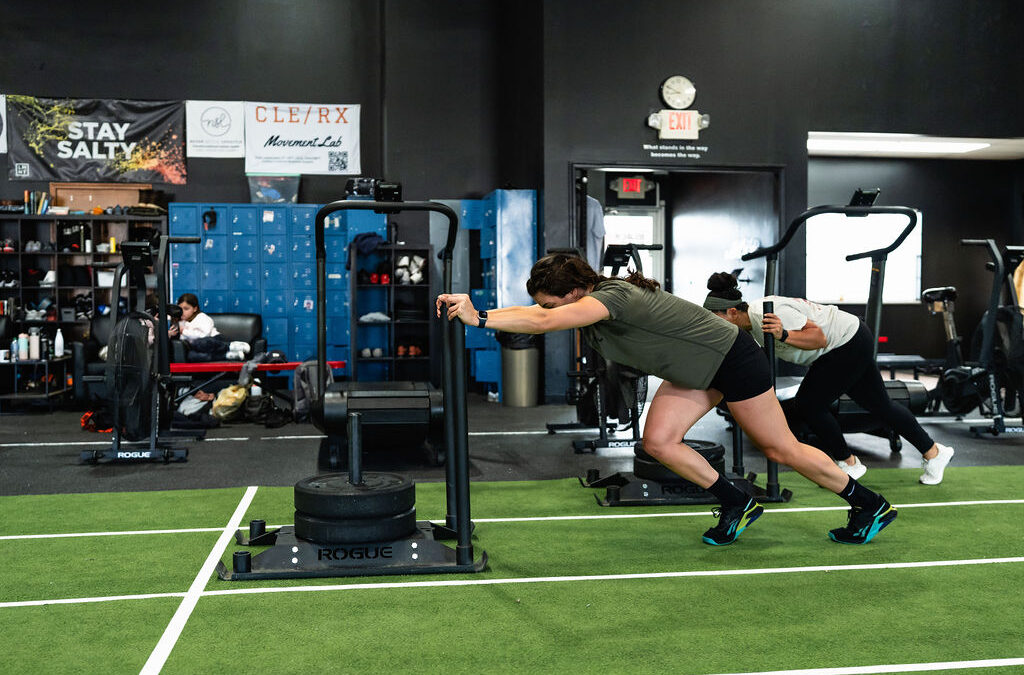
One of the hallmarks of great training is that it looks athletic.
When movement is coordinated, balanced, and powerful, there is a certain fluidity to it. The body moves efficiently, joints stay organized, and force transfers smoothly from the ground through the entire kinetic chain.
Unfortunately, many training approaches miss this mark.
Some programs chase novelty and gimmicks—overusing unstable surfaces, circus-style exercises, or movements that look impressive but produce very little meaningful adaptation.
Others swing too far in the opposite direction and turn every client into a powerlifter or Olympic lifter, focusing exclusively on maximal load while ignoring the broader movement system.
Both extremes miss the bigger picture.
True functional training is not about novelty or specialization. It is about balance.
Athletic training should integrate:
• bilateral strength
• unilateral strength
• rotational and anti-rotational work
• dynamic locomotion
• multi-directional movement
• power and elasticity
This approach creates a body that can adapt to whatever environment it encounters, whether that’s sport, work, recreation, or daily life.
Strength and Aerobic Capacity: The Twin Pillars of Longevity
When examining research on longevity and long-term health, two physical qualities consistently rise to the top:
strength and aerobic capacity.
Studies have repeatedly shown that muscular strength is one of the strongest predictors of long-term health and mortality risk. Research published in the British Journal of Sports Medicine found that higher levels of muscular strength are associated with lower all-cause mortality and reduced cardiovascular disease risk (Garcia-Hermoso et al., 2018).
Similarly, aerobic fitness—often measured through VO₂ max—has been shown to be one of the most powerful predictors of lifespan. A landmark study from the Cleveland Clinic found that cardiorespiratory fitness was more predictive of mortality than smoking, diabetes, or heart disease (Mandsager et al., 2018).
In simple terms:
Stronger people live longer.
Fitter people live longer.
But not all strength is created equally.
To develop strength that truly supports lifelong function, training should go beyond purely bilateral barbell lifts and incorporate:
• single-leg training
• single-arm loading
• offset loading patterns
• rotational and anti-rotational strength
• dynamic stability challenges
These patterns improve balance, coordination, and joint stability—qualities that become increasingly important with age.
Build Coordination Before Capacity
One of the most common mistakes in training is rushing too quickly into high intensity and large training volumes before establishing the foundation of quality movement.
Physical development should follow a progression:
Structure → Coordination → Strength → Power → Capacity
When programs skip the early steps and jump directly to intensity, the body often compensates. These compensations may allow for short-term performance gains, but they frequently lead to:
• movement inefficiency
• overuse injuries
• joint stress
• training plateaus
Developing coordination, balance, and symmetry first allows the nervous system to organize movement patterns properly. Once those patterns are established, strength and power can be layered on safely and effectively.
Research in motor learning and neuromuscular adaptation supports this approach, showing that skill acquisition and movement quality improve force production and reduce injury risk over time (Schmidt & Lee, Motor Learning and Performance).
In short:
Move well first.
Then move fast and heavy.
Training That Builds Resilience
A truly effective training system must be progressive, multi-planar, and dynamic.
It should challenge the body from different angles, with different loading strategies, and across multiple energy systems.
Well-designed programs include:
• strength training
• unilateral and rotational work
• sprinting and locomotion
• jumping and landing mechanics
• aerobic development
• high-output efforts
• recovery and regeneration
When these elements come together, the result is a body that is more adaptable, more durable, and more capable of handling stress—both inside the gym and in everyday life.
The ultimate goal of training is not simply improved performance in the gym.
It is the development of stronger, healthier, more resilient humans who can move well, produce force, and maintain their physical independence for decades to come.
Yours In Fitness,
CSCS | CFL3 | Fitness Specialist | Biomechanics Specialist | USAWL1
“Take care of your body. It’s the only place you have to live.”
Owner/Head Coach – Black Flag Strength & Conditioning