
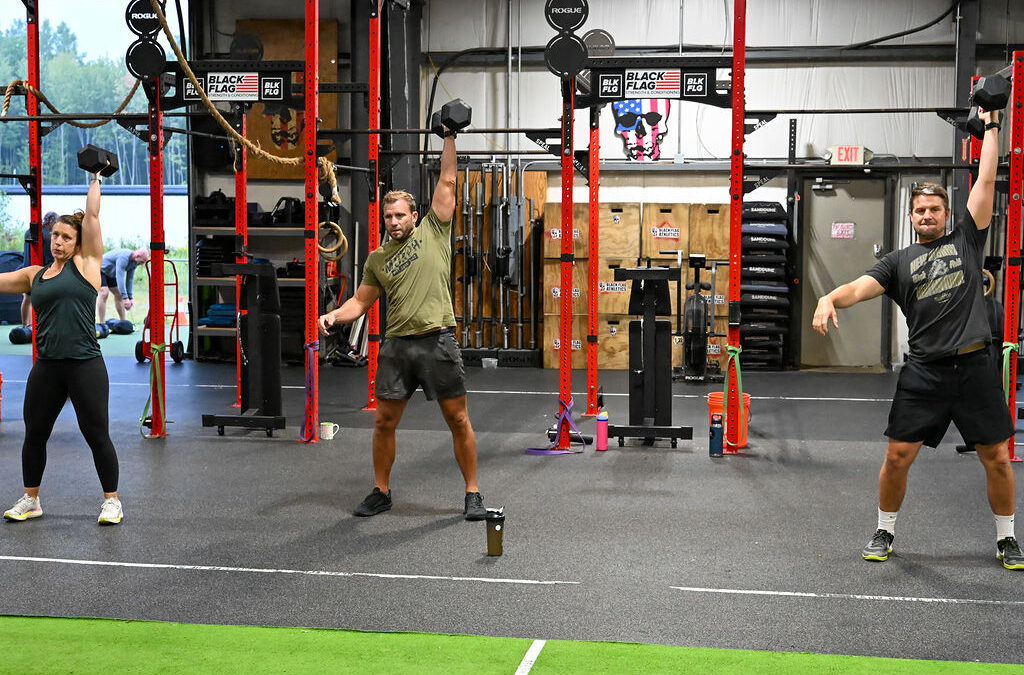
Why better training starts with understanding the person—not forcing everyone into the same movement template.
Spend enough time around a gym and eventually you’ll hear someone talking about “perfect form.”
Feet here. Knees there. Elbows at this exact angle. Lower the weight for exactly three seconds. Never deviate from the textbook version of the movement.
It sounds good. It certainly makes coaching seem simple.
There’s just one problem.
Human beings aren’t built from a template.
That doesn’t mean technique isn’t important. It absolutely is. But there’s a significant difference between effective technique and believing there is one universally perfect way to perform an exercise.
Human movement is highly individualized. Training experience, mobility, stability, coordination, strength, injury history and even the lengths and proportions of our bones all influence how we move—especially once we start adding external load.
A person with long femurs and a short torso may squat very differently from someone with completely different proportions. Someone with limited ankle mobility may need a different setup. Previous injuries can change movement strategies. Training experience matters. Strength matters. Even the goal of the exercise matters.
And that’s exactly where coaching comes in.
The Problem With Coaching From a Template
It’s relatively easy to attend a weekend seminar, learn a handful of movement standards and come home believing that everyone should squat, press, hinge and pull according to the same checklist.
But understanding movement is different from memorizing movement standards.
Good coaching requires understanding the principles behind an exercise while also recognizing the individual standing in front of you.
We shouldn’t try to make people fit exercises. We should find exercises and movement strategies that fit people.
That might mean changing stance width. Elevating the heels. Using dumbbells instead of a barbell. Adjusting range of motion. Changing grip or implement. Or sometimes choosing a completely different exercise that accomplishes the same training objective.
None of that is “bad form.”
It’s coaching.
The goal should be to prescribe the most effective movement for that particular person, with their particular body, abilities and goals, at that particular point in time.
And when the goal is building muscle, there are a few things that matter far more than making every repetition look identical.
Range of Motion Matters
One of the biggest considerations for hypertrophy is challenging the muscle through a productive range of motion.
Generally, we want to train through a relatively full range while giving the target muscle an opportunity to produce force in a lengthened position.
Think about the stretch across the pecs at the bottom of a dumbbell press, allowing the lats to lengthen during a pulldown or row, or challenging the quads through an appropriate depth during a squat variation.
That doesn’t mean every person needs the exact same range of motion.
Once again, individualization matters.
The appropriate depth or range is the one the athlete can control while maintaining the intent of the exercise.
There may also be a place for partial repetitions—particularly lengthened partials—as an advanced hypertrophy strategy. But they’re another tool in the toolbox, not a replacement for consistently training through quality ranges of motion.
You Probably Don’t Need to Count Every Second
Tempo is another area where the fitness industry has a tendency to make things more complicated than they need to be.
Three seconds down. One-second pause. Two seconds up.
Can prescribed tempos be useful? Absolutely.
Do you need to count every second of every repetition to build muscle? Probably not.
Muscle can be developed across a fairly broad range of repetition speeds. There are situations where slowing down a repetition improves control, reinforces a position or helps someone better feel the target muscle working.
But slower isn’t automatically better.
Our approach is much simpler:
Control the weight. Own the movement. Make the muscle work.
Tempo should have a reason behind it—not simply make an exercise harder for the sake of making it harder.
“Strict” Form Isn’t Always Better Form
This one might upset the form police.
A perfectly rigid repetition isn’t automatically a better repetition.
There’s obviously a difference between controlled movement and recklessly throwing weight around the gym. But a small amount of natural body movement doesn’t automatically make a repetition ineffective.
Take a dumbbell curl.
An experienced lifter using a slight amount of controlled movement to extend a hard set is very different from someone swinging a weight they can’t control from the first repetition.
The same can apply to rows, lateral raises and plenty of other bodybuilding movements.
Instead of asking:
“Was that repetition perfectly strict?”
Ask:
“Did the target muscle receive the stimulus we were trying to create?”
If momentum takes over and eliminates tension from the target muscle, we’ve probably missed the point.
But if a small amount of controlled movement allows an experienced lifter to safely extend a set and continue producing productive tension, that’s an entirely different situation.
Context matters.
There Is No Universal “Perfect”
After nearly three decades of coaching, I’ve become far less interested in whether an exercise looks perfect and far more interested in whether it is accomplishing its intended purpose.
People have different limb lengths, joint structures, mobility, injury histories, training backgrounds and goals.
So why would we expect everyone to squat, press, row or deadlift exactly the same way?
We shouldn’t.
When I’m watching someone train, I’m asking different questions.
Can they control the load?
Are they training through an appropriate range of motion?
Are we creating tension where we want it?
Can we progressively overload the movement?
Does the exercise fit their body?
And can they train it consistently without unnecessarily beating themselves up?
If the answer to those questions is yes, we’re probably in a pretty good place.
Technique matters. A lot.
But technique should serve the goal of the exercise and the individual performing it—not the other way around.
Better Than Perfect
The fitness industry loves absolutes because absolutes are easy to teach.
Always do this.
Never do that.
This is the perfect squat.
This is the perfect deadlift.
But coaching isn’t that simple, and neither is the human body.
Effective training requires principles, experience, observation and the ability to adjust those principles to the individual standing in front of you.
So stop chasing “perfect” form.
Instead, pursue effective technique.
Train through productive ranges of motion. Challenge muscles in lengthened positions. Control the load. Minimize unnecessary momentum. Progressively overload when appropriate. And choose exercises that fit your body rather than trying to force your body to fit an exercise.
There isn’t one perfect way for everybody to move.
There is, however, a better way for you to train.
And helping you find it is exactly what good coaching is supposed to do.
Strength & Conditioning is our craft.
People are our purpose.
Yours in Fitness,
CSCS | CFL3 | Fitness Specialist | Biomechanics Specialist | USAWL1
“Take care of your body. It’s the only place you have to live.”
Owner/Coach – Black Flag Strength & Conditioning
\