
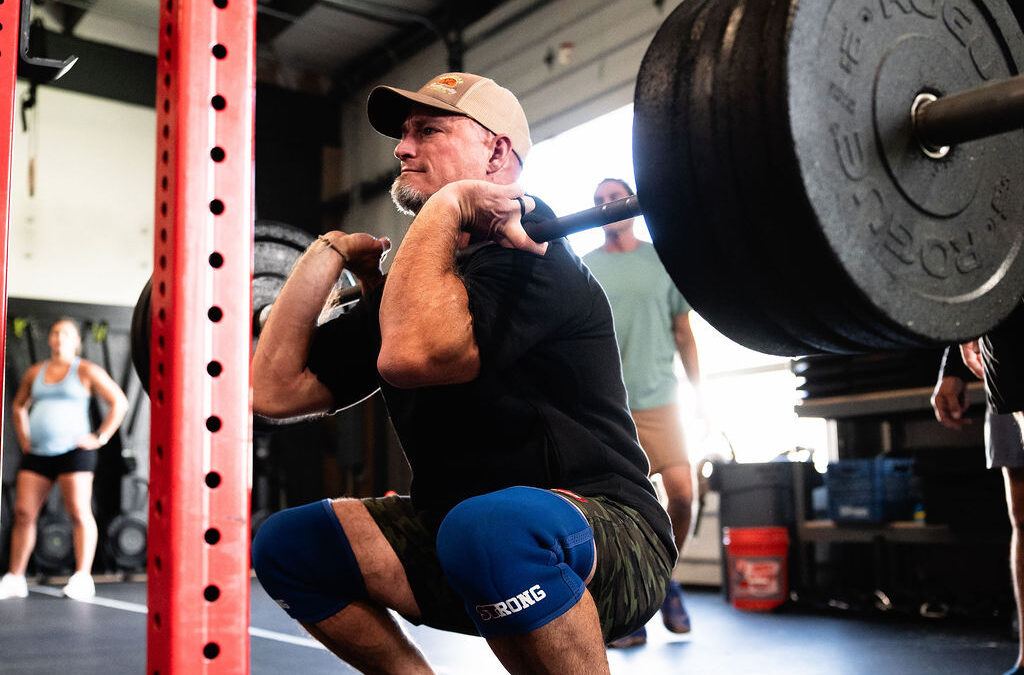
“Strength Is an Adaptation, Not an Accident”
There is a fundamental difference between exercising and training.
At Black Flag Strength & Conditioning, we believe understanding that difference is one of the most important steps toward achieving long-term results.
Anyone can make you tired. Anyone can put together a collection of exercises that leave you sweating, sore, and exhausted. But fatigue alone doesn’t necessarily mean you’re getting stronger, building muscle, or improving your physical capacity.
The objective isn’t simply to create fatigue. The objective is to create adaptation.
Understanding how the human body adapts to resistance training is at the foundation of everything we do.
Exercise vs. Training: Understanding the Difference
Although the terms are often used interchangeably, exercise and training are not the same thing.
Resistance exercise refers to an individual bout of physical activity that places a mechanical demand on the muscles and nervous system. You lift weights, your muscles produce force, and your body experiences and responds to that stress.
That’s exercise.
Resistance training, on the other hand, is the systematic application of repeated exercise bouts over time, with the intention of producing specific physiological adaptations.
That’s training.
The distinction matters because one workout doesn’t define your progress. The accumulation of appropriately designed training sessions over weeks, months, and years is what ultimately determines your results.
At Black Flag, we don’t look at workouts as isolated events. Every session serves a purpose within a larger training plan.
Your Body Is Built to Adapt
The human body is an incredibly sophisticated biological system. One of its most remarkable characteristics is its ability to adapt to the demands placed upon it.
When exposed to an appropriate amount of stress, the body responds by making changes that improve its ability to tolerate similar demands in the future.
Resistance training takes advantage of this fundamental biological principle.
When we expose our muscles and nervous system to repeated mechanical stress, the body can respond through several adaptations, including increased muscular strength, improved neuromuscular coordination, greater ability to recruit and activate muscle fibers, increased muscle size, and improved force production.
These adaptations don’t occur simply because we exercised. They occur because the stress was sufficient to challenge the system, recovery was adequate, and the process was repeated consistently.
Training is the intentional application of stress to create a desired adaptation.
Mechanical Stress: The Foundation of Strength Development
One of the most important concepts in resistance training is mechanical stress.
When a muscle contracts against resistance, it generates tension. When that tension represents a meaningful challenge relative to an individual’s current capabilities, it provides a stimulus for adaptation.
Over time, the body can become better equipped to produce and tolerate force.
This is why progressive overload is such an important component of effective strength programming.
As the body adapts, the training stimulus must evolve.
That doesn’t necessarily mean lifting heavier weights every single workout. Progressive overload can involve changes in resistance, training volume, range of motion, exercise difficulty, or the demands placed on the muscular system.
The key is that progression must be intentional and appropriate.
Simply adding more weight, more repetitions, or more exercises doesn’t automatically produce better results. The stimulus must be appropriate for the individual and aligned with the intended training objective.
More isn’t always better. Better is better.
Muscle Soreness Is Not a Measure of Success
Here’s where many people misunderstand resistance training.
We often associate a successful workout with how sore we feel the following day. But muscle soreness and muscle damage are not prerequisites for strength development.
In fact, one of the reasons the body adapts to repeated resistance exercise is to become more resilient to the mechanical stress being imposed upon it.
As we become better trained, we often experience less muscle damage and soreness from familiar training demands. This is commonly associated with the repeated bout effect, where previous exposure to a training stimulus provides some protection against muscle damage during subsequent exposures.
That’s not a sign that the program has stopped working. It’s often a sign that the body has adapted.
At Black Flag, we aren’t interested in destroying our members during every session. We want to challenge them enough to stimulate progress while managing fatigue and allowing sufficient recovery.
Because the goal is to become stronger, not simply to become sore.
How Do We Know If We’re Getting Stronger?
Strength development should be measurable.
One of the clearest indicators of improved strength is the ability to lift a heavier load in a particular movement under comparable conditions.
However, strength development isn’t limited to the amount of weight on the bar.
Another useful indicator is movement velocity.
If an individual can move the same load faster while maintaining proper technique, that may indicate an improvement in their ability to produce force.
These improvements reflect adaptations occurring within both the muscular and nervous systems.
Our muscles are responsible for generating force, but our nervous system plays an essential role in coordinating and activating those muscles effectively.
With consistent resistance training, the neuromuscular system becomes more efficient at producing force and executing movement.
This is why effective strength programming incorporates different loading strategies, movement velocities, and training methods throughout the training process.
We’re not just building bigger muscles. We’re developing a more capable neuromuscular system.
Why Intelligent Programming Matters
If strength is the result of repeated exposure to appropriate mechanical stress, then the organization of that stress becomes critically important.
Too little stimulus, and the body has little reason to adapt.
Too much stimulus without sufficient recovery, and accumulated fatigue can interfere with performance and progress.
The objective is to find the appropriate balance between training stress and recovery.
At Black Flag Strength & Conditioning, our programming is designed around this principle.
We strategically organize training sessions to balance mechanical loading, neuromuscular demands, conditioning, mobility, stability, and recovery.
Some days are designed to produce significant muscular tension and challenge force production. These sessions may include heavier resistance training, compound movements, and exercises requiring greater neuromuscular output.
Other days emphasize cardiovascular development, movement quality, and lower mechanical demands. These sessions provide opportunities to improve conditioning and movement efficiency while managing the overall training load.
These different training objectives should complement one another within the larger program rather than compete for the same recovery resources.
This is particularly important when combining strength and conditioning.
A demanding endurance session paired with a high-intensity strength session can create competing demands that may compromise performance and recovery if not appropriately managed.
Understanding how to organize these training qualities throughout the week allows us to develop strength, cardiovascular fitness, and overall physical capacity without unnecessarily sacrificing one for another.
We don’t believe every workout needs to be the hardest workout of your life.
We believe every workout needs a purpose.
Train for the Long Game
Strength is one of the most valuable physical qualities we can develop throughout our lives.
It supports our ability to perform everyday tasks, maintain independence, preserve muscle mass, and remain physically capable as we age.
But developing and maintaining strength requires consistency.
It requires progressive exposure to appropriate demands. It requires adequate recovery. And perhaps most importantly, it requires patience.
Meaningful physiological adaptation takes time.
The human body doesn’t respond to a single workout by suddenly becoming significantly stronger. It responds to the accumulation of appropriately dosed training stress over time.
This is why long-term programming matters.
A well-designed training program considers not only what you’re doing today, but also how today’s training influences tomorrow’s performance and the progress you can make over the coming weeks, months, and years.
Consistency, progressive overload, and intelligent programming will always outperform random intensity.
The Black Flag Approach
At Black Flag Strength & Conditioning, our philosophy is simple:
We don’t train just to complete workouts. We train to create lasting adaptations.
Every session should contribute to a larger objective. Every training block should build upon the work that came before it. And every member deserves programming that is intentional, progressive, and grounded in exercise science.
Our responsibility as coaches isn’t simply to provide challenging workouts. It’s to understand the physiological demands of training, apply those demands appropriately, and help our members make meaningful progress over time.
Because the ultimate goal isn’t to see how much punishment your body can tolerate today.
It’s to build a stronger, healthier, more resilient body for tomorrow.
TRAIN WITH PURPOSE. BUILD STRENGTH. STAY CAPABLE.
Yours in Fitness,
CSCS | CFL3 | Fitness Specialist | Biomechanics Specialist | USAWL1
“Take care of your body. It’s the only place you have to live.”
Owner/Coach – Black Flag Strength & Conditioning