
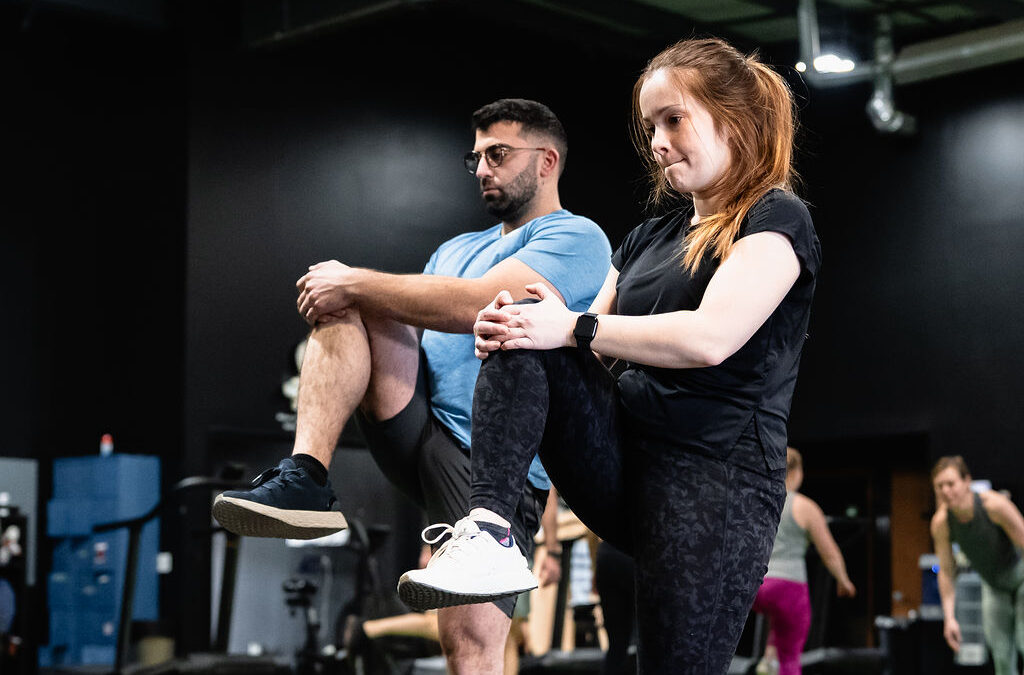
The “Horizon Rule”
Most people think posture starts with the shoulders, core, or hips.
But one of the biggest drivers of posture actually starts somewhere else:
Your eyes.
Where you look directly affects how your body organizes itself underneath you. And in today’s world of screens, stress, fatigue, and constant forward focus, most people are unknowingly training their nervous system into compensation patterns all day long.
This is what I call: The Horizon Rule
Your body tends to organize around your visual horizon.
Your eyes constantly feed information into your nervous system about balance, safety, and orientation. Your body then responds accordingly.
That means vision affects far more than eyesight. It influences:
-
posture
-
breathing
-
energy
-
movement quality
Your Eyes Are Part of Your Movement System
Before your brain cares about strength or performance, it first wants to know:
“Am I safe and stable here?”
Your eyes help answer that question.
That’s why vision is deeply connected to posture, breathing, coordination, and tension levels.
When the visual system becomes overloaded, the body often responds with:
-
forward head posture
-
shallow breathing
-
stiffness
-
elevated tension
Not because the muscles are “bad” — because the system is adapting.
Screen Time Changes Your Positioning
Most people spend hours every day:
-
looking down at phones
-
staring at screens
-
focusing only at close distances
Your eyes rarely get to scan long distances or relax into a broad horizon.
Over time, the nervous system starts organizing around that stress. The result is often:
-
poor posture
-
reduced movement quality
-
more fatigue
-
increased tension
Your body slowly shifts into a more protective state.
Simple Reset:
A few times throughout the day:
1. Stand up and look outside or across a large room
2. Let your eyes soften instead of intensely focusing
3. Take 5 slow nasal breaths
4. Relax your jaw and shoulders
It sounds simple — because it is.
But small nervous system resets throughout the day can create surprisingly noticeable changes in posture, tension, and energy.
Fatigue Isn’t Always Just “Fitness”
A lot of people think they’re tired because they’re out of shape.
Sometimes the nervous system is simply overloaded.
Constant visual stress and stimulation can contribute to:
-
brain fog
-
neck and shoulder tightness
-
low energy
-
poor recovery
That’s why many people walk into workouts already carrying tension before training even begins.
The issue often started long before the gym.
A Better Approach:
Instead of constantly trying to “push through,” ask:
“What is my nervous system adapting to all day?”
Sometimes improving recovery starts with reducing stress signals — not adding more intensity.
Movement Is More Than Muscles
If someone struggles with:
-
shoulder discomfort
-
balance
-
breathing
-
coordination
…the answer isn’t always:
“stretch harder” or “just get stronger.”
Sometimes the nervous system first needs:
-
better positioning
-
better breathing
-
better awareness
-
reduced tension
That’s why quality prep work matters.
Sometimes a small tweak in:
-
gaze
-
breathing
-
stance
-
head position
…can completely change how a movement feels.
Try This During Training:
During your next warm-up or workout:
-
keep your eyes on the horizon instead of constantly looking down
-
slow your breathing slightly
-
unclench your jaw
-
let your ribs fully expand when you inhale
You may notice immediate changes in:
-
tension
-
balance
-
coordination
-
movement quality
Why Outdoor Movement Feels Different
Ever notice how walking or hiking outside feels mentally refreshing?
Part of that is neurological.
Looking toward the horizon naturally helps:
-
relax visual stress
-
improve breathing rhythm
-
encourage upright posture
-
calm the nervous system
Your body often shifts into a more regulated state simply by changing visual input.
This is one reason outdoor movement can feel restorative even when it’s physically challenging.
The Bigger Picture
Posture isn’t just muscular.
Pain isn’t always structural.
Fatigue isn’t always conditioning.
Your body constantly adapts to the environment around it — and your visual environment may be one of the biggest hidden stressors affecting movement, recovery, energy, and performance.
That’s why sustainable fitness isn’t just about training harder.
It’s about improving the quality of the entire system.
Final Thought
Your body follows your focus.
And in many ways, your posture reflects the environment your nervous system experiences every day.
The good news?
Small tweaks create big shifts.
Sometimes improving how you see the world literally changes how your body moves through it.
Want Help Addressing This Directly?
This is exactly the kind of thing I work through during my 30-minute Recovery Sessions using the Melt → Mold → Move method.
These sessions are designed to help:
-
reduce tension and stiffness
-
improve movement quality
-
restore breathing and positioning
-
assess compensation patterns
-
help your body feel and move better overall
We look at how your nervous system, posture, breathing, movement, and daily lifestyle patterns are all interacting together — then make small, targeted tweaks to improve the system as a whole.
Sometimes the issue isn’t just tight muscles.
Sometimes the body simply needs a better environment to move from.
🏴 Built on precision. Driven by human potential.
Movement & Performance Coach | Holistic Tweakologist
Black Flag Strength & Conditioning
Great stuff Cierra!