Strong for Life: Mitochondrial Health, Training & Healthy Aging
At Black Flag, we talk a lot about getting stronger, building muscle, improving conditioning and staying capable.
But some of the most important benefits of training are things we’ll never see in the mirror.
They’re happening at the cellular level — specifically in our mitochondria.
Why Mitochondria Matter
You probably remember mitochondria from high school biology as the “powerhouses of the cell.”
Simply put, mitochondria help turn the food we eat and the oxygen we breathe into usable energy.
They help power everything we do — training, walking, thinking, recovering and simply getting through the day.
As we age, mitochondrial function can decline. Combine that with the natural loss of muscle, strength and cardiovascular capacity, and we begin to see many of the things people simply accept as “getting older.”
Less energy. Less strength. Slower recovery. Reduced work capacity. Loss of muscle and eventually, loss of independence.
We can’t stop aging.
But we can have a tremendous impact on how we age.
And exercise may be one of the most powerful tools we have.
Exercise Tells Your Body to Keep Adapting
Exercise creates stress, and our body responds to that stress by adapting.
One of those adaptations is improving our mitochondrial machinery — including the process of creating new mitochondria and improving the quality and efficiency of the ones we already have.
I like to think about it pretty simply:
Training tells your body, “We still need this. Keep it working.”
That’s a message I want to continue sending as I get older.
Don’t Forget About Muscle
Cardiovascular exercise gets a lot of attention when we talk about longevity and mitochondrial health — and it should.
Walking, biking, rowing, Zone 2 work and higher-intensity conditioning are all great tools.
But I think strength training and maintaining muscle need to be just as much a part of the longevity conversation.
Muscle isn’t just about looking good.
It’s metabolically active tissue. It helps us manage glucose, supports our metabolism and, most importantly, allows us to continue doing things.
Strength matters.
Muscle matters.
Especially as we age.
I’ve said this many times: muscle is like a retirement account.
You don’t wait until you’re 70 to start investing.
You build as much of it as you reasonably can now and then work hard to maintain it.
This Is Why We Believe in Strength AND Conditioning
I don’t think we should have to choose between being strong and being conditioned.
We should train for both.
Lift weights to maintain muscle, strength, bone density and physical capacity.
Build an aerobic base to support cardiovascular and mitochondrial health.
Occasionally train hard enough to challenge the higher-output energy systems.
And outside of the gym — walk, move, sleep, eat enough protein and recover.
It doesn’t have to be overly complicated.
It just has to be done consistently.
The Real Goal Is Healthspan
I’m becoming much more interested in healthspan than simply lifespan.
I don’t just want to live longer.
I want to be able to train, travel, work, play with my family, get off the floor, carry things and remain independent for as long as possible.
That’s what training should ultimately provide.
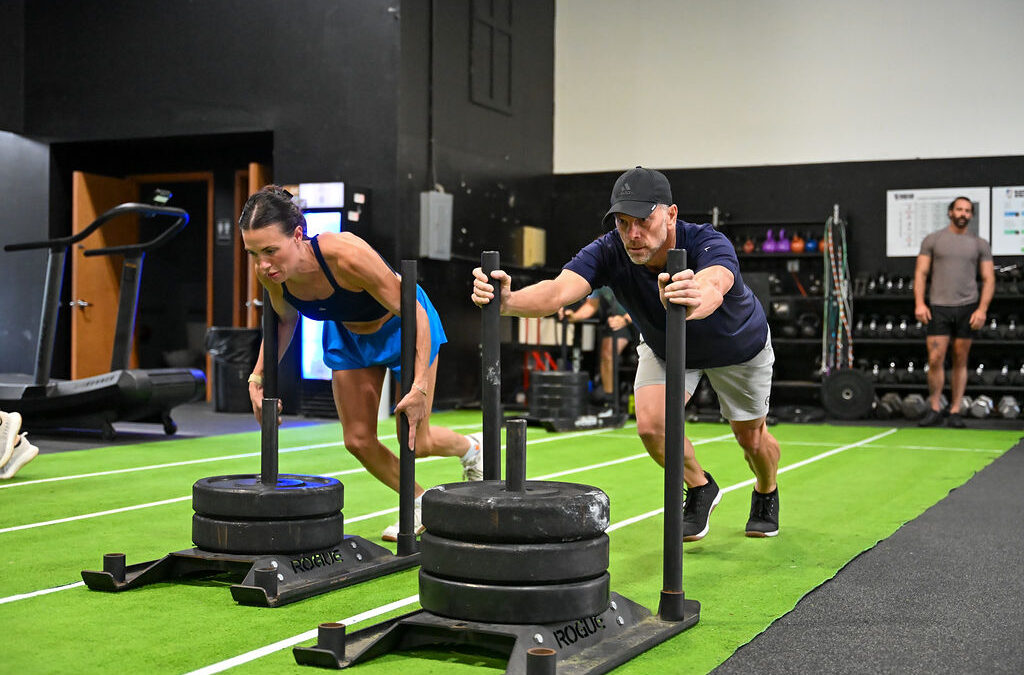
Every squat, deadlift, press, row, carry, bike interval and conditioning session is doing more than improving today’s workout.
It’s telling your body:
Stay strong. Stay capable. Keep adapting.
We can’t control everything about getting older.
But we can absolutely stack the deck in our favor.
Lift weights. Build muscle. Condition your heart. Move often. Recover well.
Don’t just add years to your life.
Build a body that allows you to keep living during those years.
Yours in Fitness,
CSCS | CFL3 | Fitness Specialist | Biomechanics Specialist | USAWL1
“Take care of your body. It’s the only place you have to live.”
Owner/Coach – Black Flag Strength & Conditioning